
 The Standard Group Plc is a multi-media organization with investments in media
platforms spanning newspaper print
operations, television, radio broadcasting, digital and online services. The
Standard Group is recognized as a
leading multi-media house in Kenya with a key influence in matters of national
and international interest.

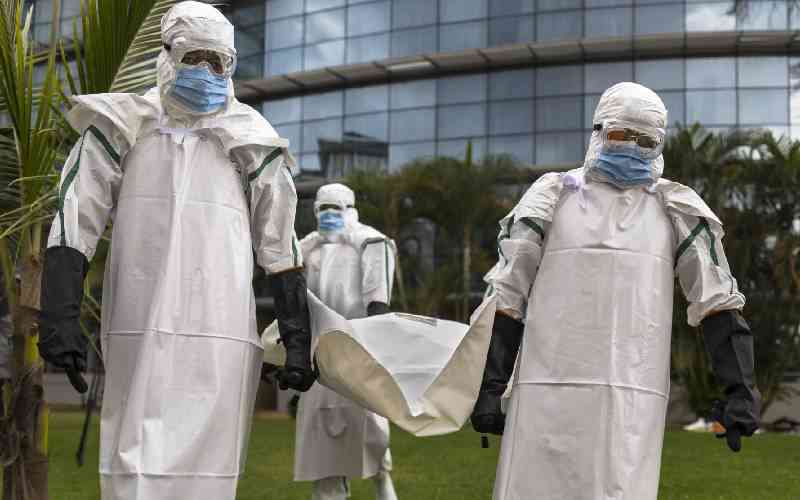
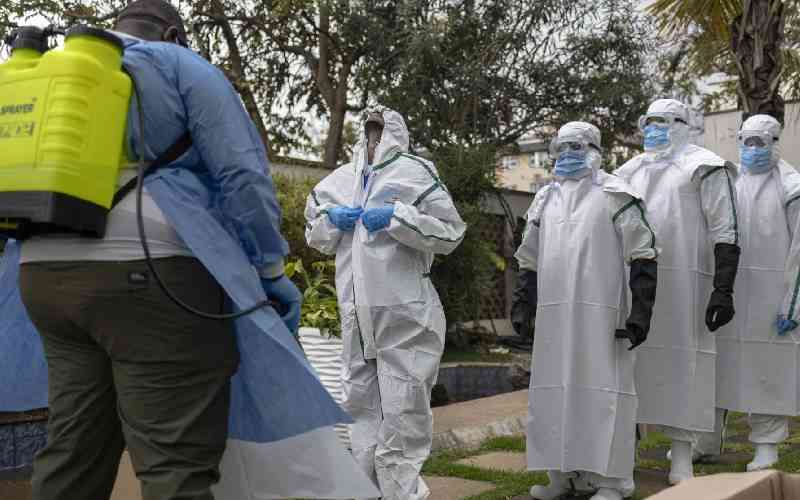
Kenya Red Cross personnel doff their Personal Protective Equipment during a simulation of the evacuation of the remains of an Ebola victim in Nairobi on October 22, 2026. [AFP]
Kenya has gone three consecutive weeks without reporting a new confirmed Ebola case, fuelling optimism that the Bundibugyo outbreak may soon be brought to an end.
The country is now preparing to begin the critical 42-day countdown required before it can officially declare itself Ebola-free.
Health Cabinet Secretary Aden Duale said all nine infections recorded since the outbreak began on October 6, 2026, were linked to a single cluster originating from an imported case, with no evidence of community transmission.
Six patients have recovered, two have died, while one remains under treatment.
Speaking after hosting a World Health Organisation (WHO) delegation led by its Regional Director for Africa, Yakub Janabi, Duale said the government was working with international partners to sustain surveillance and strengthen response capacity during the final phase of the outbreak.
The discussions focused on monitoring the 42-day countdown, which will determine when Kenya can officially declare the outbreak over, provided no new confirmed infections are recorded and the required public health criteria are met.
- Why the referral system is choking major hospitals as patients suffer
- Duale: Three suspected Ebola cases tested negative, surveillance upped
- WHO warns of rising Ebola threat as Kenya tightens response efforts
- Kenya preparedness amid global Ebola threat
Keep Reading
Duale, however, raised concern over blanket travel bans and visa restrictions imposed by some countries against affected nations, warning that penalising countries for transparently reporting outbreaks could undermine international cooperation.
"Countries that report outbreaks transparently should be supported, not penalised for meeting their international obligations," he said, urging WHO to advocate for evidence-based measures consistent with the International Health Regulations.
His remarks come amid travel restrictions imposed by several countries in response to the Ebola outbreak, including measures targeting travellers with recent travel history to affected countries.
The CS said Kenya had demonstrated transparency through timely reporting, sharing surveillance data and genomic sequences, and adherence to WHO guidance.

Health Cabinet Secretary Aden Duale and Ministry officials after a bilateral meeting with WHO Regional Director for Africa Yakub Janabi to review the Ebola response and reinforce collaboration on health security in Nairobi. [Courtesy]
The government also called for continued international support, including additional test kits and reagents, expanded technical training and stronger isolation and treatment facilities in high-risk counties.
WHO's support has included essential response supplies, personal protective equipment, assistance in validating Kenya's Filovirus Surveillance Standard Operating Procedures, 12 portable polymerase chain reaction (PCR) systems and a 28-bed Ebola Treatment Unit.
The equipment is expected to strengthen the country's capacity to diagnose, isolate and treat suspected and confirmed cases.
Kenya has screened more than 772,000 travellers at 28 points of entry, tested 736 samples in five designated laboratories and trained more than 7,300 healthcare workers as part of the response.
As the country approaches the final phase, Duale warned against relaxing surveillance, calling for continued screening at points of entry, prompt investigation of alerts and adequate resources for frontline response teams.
The government and WHO also agreed to conduct an After-Action Review to assess the response, identify gaps and strengthen preparedness for future public health emergencies.
The meeting further discussed broader health security priorities, including strengthening the Kenya National Public Health Institute, improving International Health Regulations capacities, expanding local manufacturing and domestic health financing, and advancing digital health transformation.
Duale said the government remained committed to working with WHO and regional partners to end the outbreak while consolidating the gains made in surveillance, laboratory capacity and emergency preparedness.









 join
