
 The Standard Group Plc is a multi-media organization with investments in media
platforms spanning newspaper print
operations, television, radio broadcasting, digital and online services. The
Standard Group is recognized as a
leading multi-media house in Kenya with a key influence in matters of national
and international interest.

Leaning heavily on his crutches, Harold Kipchumba speaks with the urgency of a man who knows what polio can take away.
To the nominated senator, news of a child infected with polio in Kenya is more than a public health alert. It brings back memories of a childhood stolen by a disease that could have been prevented.
“I feel bad because I usually ask where they are and, at times, call the departments in charge to follow up,” he says. “But at a personal level, the pain hurts so much that there is yet another child who has to suffer due to inaction by other people.”
As Kenya joins the world in marking World Polio Day today, Kipchumba is confronting a troubling reality. Despite years of vaccination campaigns and community mobilisation, gaps in immunisation and funding threaten to undermine the progress made against the disease.
His concerns have been heightened by the detection of circulating vaccine-derived poliovirus type 2 (cVDPV2) in a four-year-old girl at the Dadaab refugee camp in Garissa County. The child, a newly arrived refugee from Somalia, was identified during screening and had not received any doses of the oral polio vaccine.
To Kipchumba, the case is a reminder of what happens when a child is left unprotected. He draws a distinction between a disability caused by an accident and one resulting from a preventable disease.
“If someone is riding a bicycle and is knocked down, breaking their legs, you can place some responsibility on the person who caused the accident,” he says.
Polio, however, is different. It can leave a child with lifelong paralysis, changing the course of their life and placing a lasting burden on their family.
Kipchumba knows this too well.
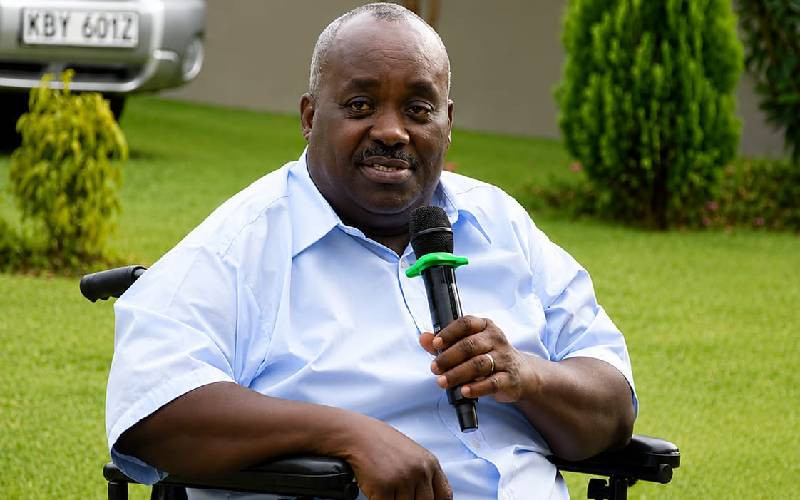
Born and raised in Baringo, Kipchumba was four years old when he contracted wild poliovirus. Initially, his mother thought he was suffering from an ordinary illness, only for it to develop into a lifelong condition.
With a heavy heart, he recalls how, while other children ran and played, he struggled with the effects of paralysis.
The disease also exposed his family to stigma. Instead of receiving sympathy, his condition was attributed to a curse.
The experience changed his life, including his childhood dream of becoming an army general, a career he believes polio denied him the opportunity to pursue.
“I wish the certification of wild poliovirus eradication in Africa had taken place 60 years ago. I could have lived to my fullest potential. I could have become the army general that I had dreamt of being,” he says.
In 2013, following a polio outbreak that left 14 people paralysed, Kipchumba decided to turn his experience into a campaign to protect other children.
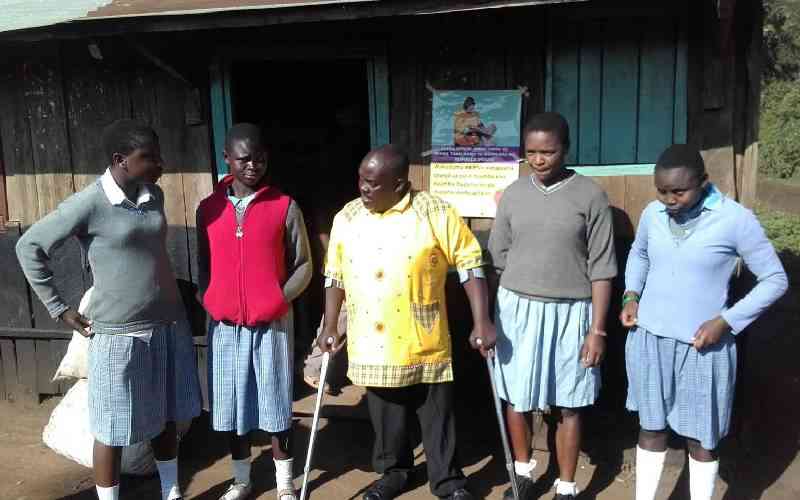
He began mobilising fellow polio survivors, taking their experiences to communities, media platforms, government meetings and development partners.
They aimed to put a human face to the disease and show parents and policymakers what was at stake when children missed vaccination.
Raising awareness
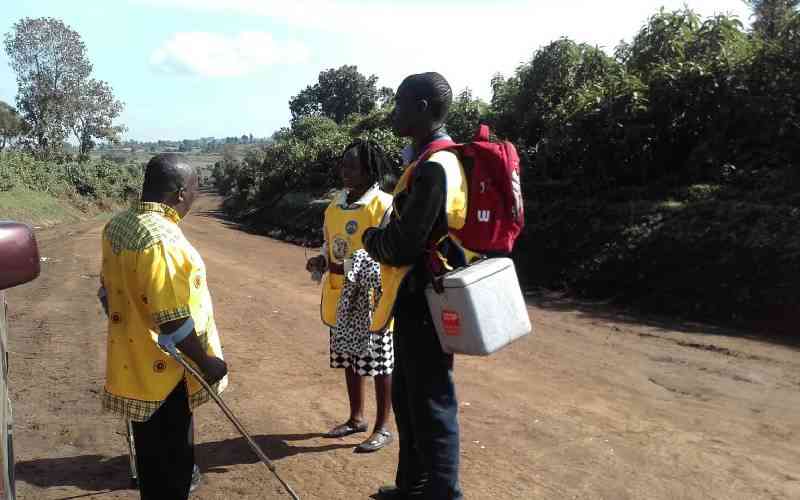
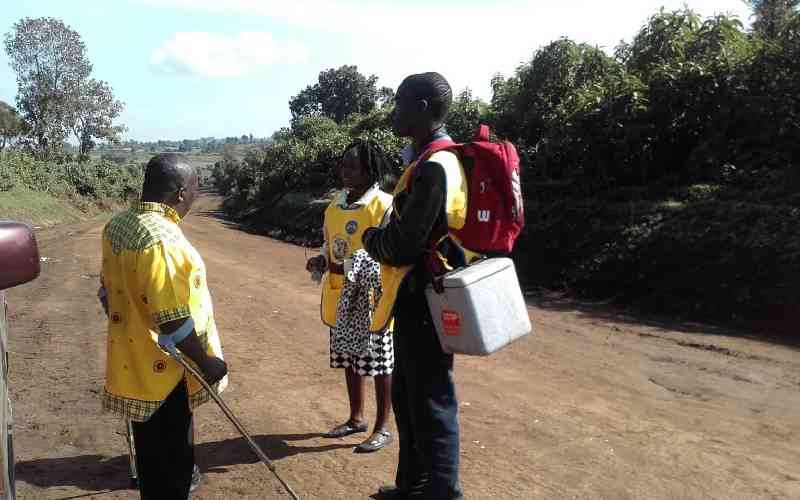
The campaign took survivors across mountains and valleys to raise awareness, lobby local leaders, advocate for immunisation and monitor vaccine cold chains to ensure doses remained effective.
In 2015, Kipchumba was recognised as the United Nations Person of the Year for his contribution to health advocacy. He also received recognition from the Orange Democratic Movement (ODM), led by the late Raila Odinga, for his exemplary work.
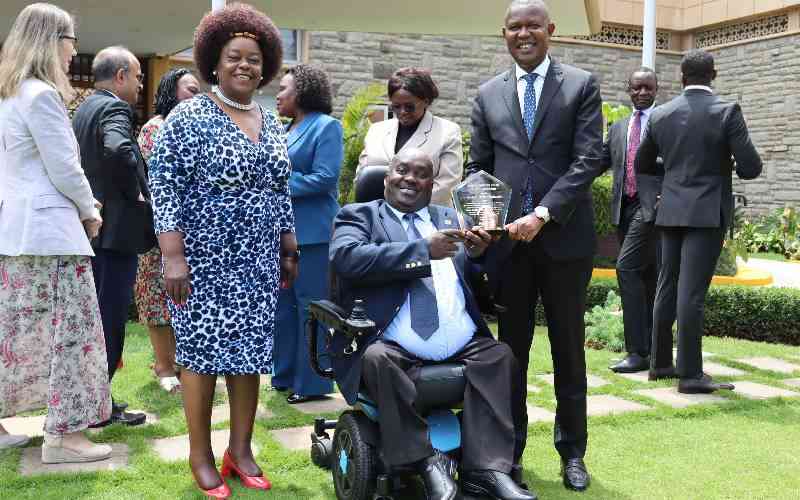
Today, his efforts are being recognised through a polio advocacy award from Rotary World Disability Advocacy, in acknowledgement of his contribution to polio education, immunisation and prevention.
The advocacy initiative champions the human rights of persons with disabilities worldwide, calling for the inclusion and recognition of more than one billion people with disabilities globally.
“I am grateful that the little steps and little efforts some of us are making are being recognised. It is not for me, but for every polio survivor who has taken time to share the pain of living with polio, to eradicate it from the world,” he says.
Today, Kenya is polio-free following years of immunisation campaigns, but the danger still lurks.
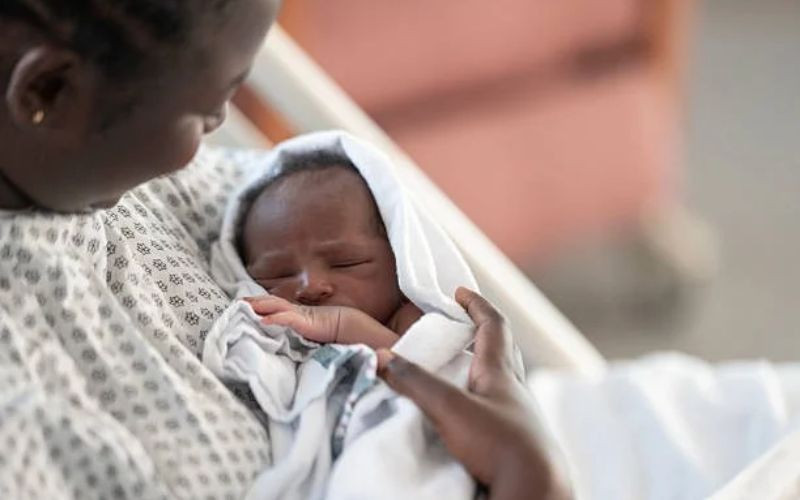
Edna Komen, a teacher, spent months searching for a polio vaccine for her newborn after delivering at a private hospital in Eldoret, where the dose was unavailable. She was referred to Moi Teaching and Referral Hospital, but the vaccine was also out of stock.
Anxious to protect her child, Komen extended her search to hospitals in Baringo County, including Kabarnet, only to receive the same response.
Attempts to find help through social media networks also failed to yield an immediate solution. She eventually secured the vaccine after about three months of searching.
“It really stressed me, failing to get a jab for my baby immediately after birth. I am thankful he managed to get it and is growing well,” she says.
Her experience highlights the difficulties parents can face when they are willing to vaccinate their children but cannot access the required doses.
Routine childhood polio vaccination includes doses at birth and at six, 10 and 14 weeks, according to the national immunisation schedule. Missing doses leaves children vulnerable and can allow the virus to circulate in communities where immunity is low.
For a disease that can cause permanent paralysis or death, delays in vaccination can have serious consequences.
Paediatrician and researcher Professor Ruth Nduati says vaccination has transformed the outlook for children who would otherwise face the threat of polio.
Nduati recalls a time when the disease paralysed and killed children, leaving survivors with disabilities that lasted into adulthood.
Although most polio virus infections do not cause paralysis, infected people can transmit the virus without showing obvious symptoms. This makes high vaccination coverage essential, even when cases are rare.
The rarity of the disease, Nduati says, can also make it harder for parents to appreciate the importance of immunisation.
Walter Jaoko, a professor of medical microbiology and tropical medicine, says important scientific questions remain about how weakened polioviruses used in oral vaccines can change over time and regain the ability to cause disease.
The novel oral polio vaccine type 2 (nOPV2) was developed to be more genetically stable and reduce the risk of new vaccine-derived outbreaks.
However, continued surveillance and research remain necessary. “There are still gaps that we are trying to fill,” says Prof Jaoko.
Most effective tool
He emphasises that vaccination remains the most effective tool for preventing transmission and protecting children. “The more children are vaccinated, the better for preventing transmission, including vaccine-derived infection. Rotary has done well in this and should maintain coverage,” he adds.
Vaccine-derived poliovirus outbreaks can occur when a weakened virus used in oral vaccines circulates for an extended period among under-immunised populations and changes genetically.
The problem is therefore closely linked to immunity gaps, rather than being a reason to abandon vaccination.
Africa was certified free of indigenous wild poliovirus in 2020, following decades of vaccination, surveillance and community mobilisation.
Wild poliovirus type 1 remains endemic in Afghanistan and Pakistan, while vaccine-derived outbreaks continue to pose a threat in areas where routine immunisation is inadequate. Kenya’s detection of vaccine-derived poliovirus is a warning that progress against the disease cannot be taken for granted.
Kipchumba says he is troubled by reports of children missing vaccines and fears that years of community work could be undone if routine immunisation is neglected.
“We need to push more. It isn’t as big as it was, but that small gap, that failure, or exposing any child to polio is a failure to the children of the world,” he says.
Gavi has sought Sh1.6 billion from the Kenyan government as part of its co-financing obligation, amid concerns over vaccine financing and supply.
For Kipchumba, the government must make immunisation a budgetary priority rather than wait for outbreaks to expose weaknesses in the system.
At a polio partnership meeting coordinated by Rotary International ahead of the World Polio Day, health officials and partners called for renewed efforts to reach children who have missed routine immunisation, particularly in underserved communities.
Dr Boston Edward Zimba, a public health specialist and immunisation expert with the World Health Organisation (WHO), said that although polio cases have declined by more than 99 per cent globally.
“Polio thrives where there are immunity gaps. We are not doing well, not only in Kenya, but across the region. We are striving to reach pre-pandemic levels,” said Dr Zimba.
Dr Vickie Koskei said Kenya’s oral polio vaccination coverage stood at 77 per cent at the end of 2025, leaving pockets of unprotected children.
In Nairobi alone, about 40,000 children reportedly received no routine vaccines in 2025.
Rosalla Kalani, head of the Vaccine Preventable Diseases section at the Ministry of Health, said Kenya conducts acute flaccid paralysis surveillance, environmental surveillance at 23 sites and screening around refugee camps to detect the virus.
However, some communities remain difficult to reach because of insecurity, poor roads, language barriers and economic challenges.
Christine Mieno, a vaccination expert, cautioned that the rarity of polio had made some parents underestimate the importance of vaccination.
She called for stronger leadership and an annual polio action plan, saying some planned activities had been shelved.





 join
