
 The Standard Group Plc is a multi-media organization with investments in media
platforms spanning newspaper print
operations, television, radio broadcasting, digital and online services. The
Standard Group is recognized as a
leading multi-media house in Kenya with a key influence in matters of national
and international interest.
The Standard Group Plc is a multi-media organization with investments in media
platforms spanning newspaper print
operations, television, radio broadcasting, digital and online services. The
Standard Group is recognized as a
leading multi-media house in Kenya with a key influence in matters of national
and international interest.

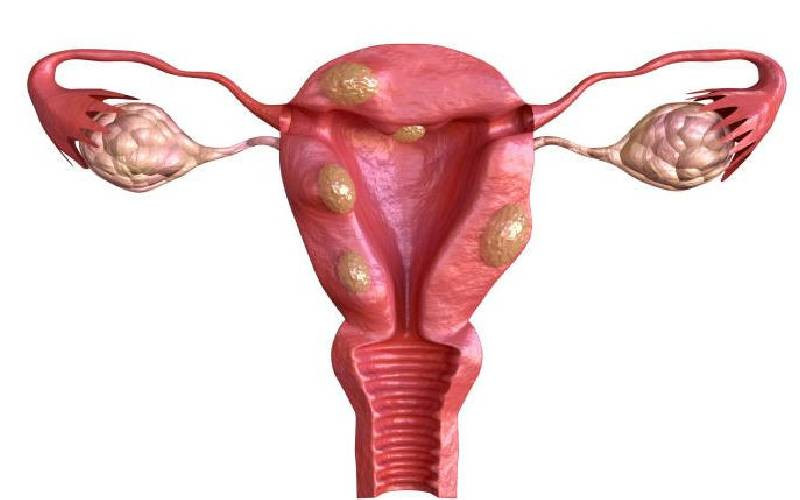
In Kenya, many women live with silent internal growths — fibroids, ovarian cysts and other masses — without realising the potential impact on their health and fertility. These slow-growing abnormalities often go unnoticed for years, masked as mild discomfort, heavy periods or digestive problems. By the time they are detected, they may already have disrupted fertility, compressed vital organs, or caused significant emotional and psychological strain.
Dr Hiba Tahjiud, a consultant obstetrician and gynaecologist at Reliance Hospital in Nairobi says one question frequently arises: under what circumstances can a woman live for years with a large internal mass without obvious symptoms?
“The key factor is slow growth,” Dr Tahjiud explains. “Many internal masses develop gradually. When growth is rapid, symptoms appear quickly. But slow-growing masses, especially those in the uterus or ovaries, can remain unnoticed for years. The body adapts, accommodating these changes silently. Not all growths are dangerous, but proper medical evaluation is essential.”
She notes that both the uterus and ovaries are located deep within the pelvis. “When a mass forms in this region, it often expands upwards towards the abdomen or bowel. Because of the available space, it can grow considerably without producing significant symptoms. Women may experience vague discomfort, bloating, heartburn or mild digestive problems, which are often not associated with reproductive health, leading to missed diagnoses.”
Dr Tahjiud adds that heavy or painful menstrual cycles, frequently caused by conditions such as fibroids, are often normalised. “Many women say, ‘Everyone has heavy periods’ or ‘Painful cycles are normal.’ This normalisation delays diagnosis. By the time the condition is discovered, the growth may be large, detected incidentally, or found during an emergency.”
For some women, the diagnosis comes only after the mass reaches a size that interferes with daily life, compressing nearby organs. “A slow-growing fibroid or ovarian mass can take more than a decade to reach a size that produces noticeable symptoms. During this time, the body compensates, masking what is happening internally,” she explains.
The consequences of long-standing pelvic or abdominal masses extend far beyond discomfort. For women who have never given birth, these growths can severely disrupt fertility. “Successful conception requires healthy ovaries, open fallopian tubes and a functional uterus within a stable pelvic environment. Masses can distort this environment by blocking the fallopian tubes, displacing the uterus or interfering with ovarian function. Inflammatory conditions, such as endometriosis, further complicate fertility.”
- Mediheal loses bid to stop sale of hospital equipment
- 25 years of pain: How a 5kg tumour denied a couple the joy of parenthood
- Women survive, retain fertility better than men after childhood cancer treatment
- Why couples should undergo medical screening before "I do"
Keep Reading
Often, women discover these problems only when attempting to conceive. “It is not uncommon to find a six-by-six-centimetre fibroid positioned on the uterus, preventing pregnancy or contributing to recurrent miscarriages,” she says. “Delayed diagnosis is not always the woman’s fault. Social perceptions, limited awareness and healthcare barriers all play a role.”
Cultural norms also contribute to delayed medical consultation. “Many women normalise pain and heavy bleeding, believing it is simply part of being female. Others misinterpret symptoms as acidity, bloating or digestive problems. This leads to late presentation,” Dr Tahjiud explains.
Diagnosis is further delayed by fear, financial constraints and limited access to specialised care. “Women may fear surgery, losing an ovary, or even their uterus. In many primary healthcare facilities, gynaecologists and imaging services such as ultrasound are unavailable. These barriers significantly hinder early detection and treatment.”
She adds that overlapping symptoms complicate diagnosis. “A slow-growing ovarian cyst may cause bloating, which is attributed to diet. Fibroids may cause heavy menstrual bleeding that is considered normal within families or communities. Such normalisation postpones intervention until serious complications develop.”
The psychological dimension is equally significant. Cultural taboos around discussing reproductive and pelvic health prevent early care-seeking. “In many communities, discussions about the pelvic area remain sensitive or taboo. This silence increases risk, as abnormal symptoms remain hidden,” Dr Tahjiud says.
Internal growths can also exert pressure on surrounding organs, producing diverse physical symptoms. The uterus lies just above the bladder, and masses may compress it, causing frequent urination, discomfort or a persistent sensation of incomplete emptying. “Compression of the ureters — the tubes that carry urine from the kidneys to the bladder — can lead to kidney swelling and, over time, potential kidney damage,” she explains.
The intestines may also be affected, resulting in bloating, constipation and difficulty passing stool. Musculoskeletal effects, including back pain, leg heaviness and nerve compression, can occur when masses press against nerves in the lower back or pelvis. Sexual dysfunction is another consequence, as some masses cause pain during intercourse, contributing to emotional distress and relationship strain.
Several biological, hormonal, genetic and environmental factors influence the growth of pelvic masses. “Fibroids are hormone-sensitive,” Dr Tahjiud says. “Oestrogen and progesterone promote their growth from adolescence until menopause. Conditions such as adenomyosis are similarly hormone-dependent.”
Genetics can also play a role, particularly in malignant growths, where DNA mutations drive abnormal cell division. Environmental exposures — including diet, lifestyle and chemical pollutants — may influence growth patterns, although further research is required.
“The combination of these factors explains why some masses remain asymptomatic for years, silently affecting health and fertility without immediate warning,” she adds.
Fear, limited finances and lack of diagnostic capacity further delay detection. “Primary healthcare facilities often lack specialised staff and imaging equipment. Women may also fear discovering a serious condition. All these factors combine to delay diagnosis,” Dr Tahjiud notes.
She emphasises the importance of awareness and education. “Many women do not know what is normal or abnormal. Healthcare providers must bridge this knowledge gap and encourage early medical evaluation. Without awareness and access, women continue to suffer silently.”
Fibroids vary greatly in size, ranging from as small as a peanut to as large as a football. Symptoms depend more on location than size. “A small fibroid can cause heavy bleeding, while a large one may produce few symptoms until it begins pressing on other organs,” she explains.
Dr Tahjiud urges couples experiencing difficulty conceiving to seek medical assessment after six months to one year, depending on age. Both partners should be evaluated, as infertility affects men and women equally.
“Management should be stepwise and individualised,” she says. “It begins with careful history-taking, examination and investigations, followed by appropriate treatment. Fertility care is a journey that requires medical guidance, emotional support and partnership at every stage.”
Across Kenya, women face silent reproductive health challenges, often masked by slow-growing internal masses such as fibroids and ovarian cysts. These conditions affect physical health, emotional wellbeing and social stability. Early detection, public awareness and accessible healthcare are essential to preventing avoidable suffering and preserving fertility.











 join
join