×

The Standard e-Paper
Home To Bold Columnists
 The Standard Group Plc is a
multi-media organization with investments in media platforms spanning newspaper
print operations, television, radio broadcasting, digital and online services. The
Standard Group is recognized as a leading multi-media house in Kenya with a key
influence in matters of national and international interest.
The Standard Group Plc is a
multi-media organization with investments in media platforms spanning newspaper
print operations, television, radio broadcasting, digital and online services. The
Standard Group is recognized as a leading multi-media house in Kenya with a key
influence in matters of national and international interest.

Audio By Vocalize

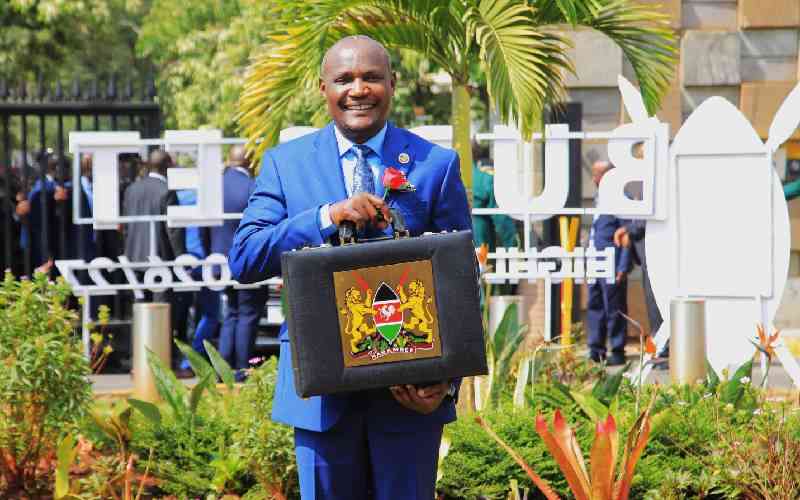
Treasury CS John Mbadi before reading the 2026-27 Budget at Parliament buildings, Nairobi, on June 11, 2026. [Elvis Ogina, Standard]
Politics, well disguised, opened Treasury Cabinet Secretary John Mbadi’s budget speech with a tribute to the late Raila Odinga.
Mbadi then explained his wide consultations, creating a sense of budget ownership. That included X spaces, perhaps to appeal to Gen Z. He paraphrased the key issues: the cost of living, employment and growth.
He then quickly assured us of our safety from Ebola. I did not know the police hospital was operational. Will a teachers’ or a hustlers’ hospital be next?
The CS then alluded to the next threat: the Iran war and its effect on the cost of living.
He then focused on success cases, including Kenya’s economic growth being better than global and African averages.
The decline in the last year was muted. Inflation and exchange rates were highlighted. One key indicator was missing: productivity. It was not in the economic survey.
Achievements in agriculture were identified – subsidised fertiliser and higher yields with major crops were mentioned.
Health was next; the number of citizens registered with the Social Health Authority (SHA) was the usual benchmark.
Why not our longevity? Outstanding medical bills were highlighted. The word “verification” has become too common. Can verification be automated?
Housing was next, with the number of units completed and jobs created. What percentage was sold? Why highlight the number of beds in universities and not hostels built? Physical markets were mentioned; what of online ones?
A major constituency, the youth, was highlighted with empowerment centres and film hubs. Riverwood? Why not innovation centres? Link to global markets?
Paid internships should be linked to accelerated economic growth to create more jobs. Has the Hustler Fund created enterprises?
Energy was mentioned, with the number connected to the grid. Reliability? How many jobs have industrial parks created?
Social security also featured in Mbadi’s speech, as well as increased enrolment in schools, Competency-Based Education (CBE) implementation, Technical and Vocational Education and Training (TVET) and universities.
Stay informed. Subscribe to our newsletter
Link to employability, entrepreneurship and innovation?
The blue economy was linked to the number of fish landing sites, not the tonnage of fish. Deep ocean fishing?
Arid and Semi-Arid Lands (ASALs), investment in roads and integration of duksi and madrassa into modernity were highlighted.
Why does devolution come at the end of key achievements? Should it be about the money given to countries or their economic transformation? Why does the budget theme come on page 38? Not too late? The alternative financing for roads was also highlighted under the Public-Private Partnerships (PPPs) and the National Infrastructure Fund, with the Rironi-Mau Summit given as an example. Why is the National Social Security Fund (NSSF) both a debtor and investor? Any risks to pensioners?
Why is data on growth rates, inflation, and exchange rates repeated on pages 47-48? The Nairobi Securities Exchange’s (NSE) performance should be compared with GDP growth. Why was the fiscal deficit projection given for the 2028-2029 financial year? Why not other variables?
Some of the priority areas included coordinating fiscal/monetary policies, infrastructure, industrial developments, climate change, human capital development, youth empowerment, and governance reforms.
Next were reforms in government procurement and the shift to e-GP. Will that reduce corruption or centralise it?
Reforms in state-owned enterprises also featured in Mbadi’s speech. When will this be completed, having begun during the Uhuru era?
The Infrastructure Fund will be joined by sovereign wealth funds through a bill to Parliament. Why was sugar reform put next to funds?
Inventory management should be together with e-GP! Use of electronic signatures, electronic seals, and time-stamping is long overdue.
Why are local pending bills verified? Why not money owed to the International Monetary Fund (IMF) and other lenders? Why are pending bills not given the same priorities as foreign debt, yet that money remains here!
Spreading out the minimum capital requirement for banks to 2032 gave them a breathing space. How many new banks have there been since lifting the moratorium on new banks last year?
When are we getting out of the grey list? What are virtual assets to Wanjiku? On capital market development, when is the next initial public offering (IPO)? When is Wanjiku (ordinary Kenyan) making money from carbon credits?
Why did coffee marketing reforms come that late in the speech? When am I buying and selling coffee futures?
We hope the new pension management systems will save pensioners the agony of “knowing someone” to get their dues. The CS also highlighted reforms in the insurance sector. Will that lead to higher penetration rates?
Will reforms in the Kenya Revenue Authority (KRA) lead to a more friendly interaction with taxpayers? Pre-populating tax returns is a matter of concern.
That gives KRA an upper hand and could lead to more cash-based transactions and less tax collected.
The shift to accrual accounting and the Single Treasury Account and audit reforms are quantum leaps. Let’s see how they work.
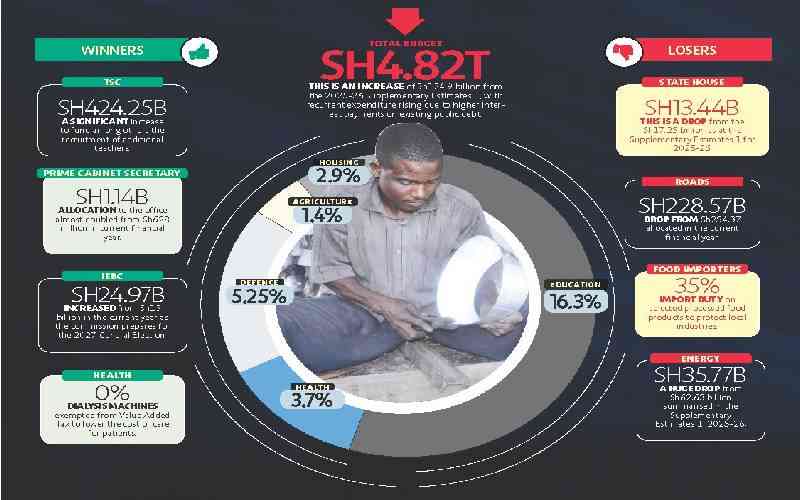
The Sh4.8 trillion budget looks ambitious; is 2027 the reason? Financing 90 per cent of the Sh1.2 trillion deficit by internal borrowing could crowd out the private sector.
The use of new bonds like sukuk and debt swaps could reduce debt and release funds for social services in education and health, areas devoid of mega-projects.
In addition to using IT to monitor development projects, PPPs will be used to reduce pressure on government funds in energy, roads, and ports. More investment in dams and power generation through PPPs?
Echoes of the Kibaki era: there will be rapid-results initiatives. Investing by pension funds and Saccos into strategic projects is a step forward, but hopefully it will not distract them from their core mandate.
Finally, expenditure is shared, with some sectors such as education getting the lion’s share. Why is research and development (R&D) getting so little?
Allocations target key constituents, with 2027 in mind? Why are some areas mentioned by name and others not? Is the Sh50 billion for housing in addition to the housing levy?
Are we still building county headquarters 15 years after devolution? When will the Bus Rapid Transport (BRT) be completed?
Village elders will now be paid. Does that include urban centres? How are they selected? We should vote for them! Cash transfers should one day include the unemployed; they are economically disabled. Money for asbestos removal finally.
Counties will get their 445 billion; how much did they generate? To show where power resides, out of Sh4.8 trillion, Parliament gets 51 billion and the judiciary Sh30 billion. Guess who gets the rest?
Tax measures were highlighted, with some curious ones: why zero per cent import duty on goods, equipment and materials used in PPPs? There were VAT exemptions on PPP projects? Should we speculate?
There are tax changes for petroleum contractors, trusts, filing dates and dividends. Add tax reforms on royalties and professional services. VAT reforms and excise duty reforms were then highlighted, including on vintage cars, alcohol, betting, lotteries and coal (why?).
The speech then looked at changes in tax procedures. No PIN for nonresidents in opening CDSC accounts, new anti-avoidance rule, amnesty extension and tax disputes. Levies are addressed, targeting railways, import declaration, REITs and road maintenance.
At the end of the speech, everyone was thanked except Kenyan taxpayers! I could feel the ghosts of 2024 protests and 2027.
The speech was 202 pages, the longest I have come across. Last year’s was 142 pages. Is this a strategy to exhaust us so we do not seek details?
Who reads the 202 pages, almost the same size as our 193-page Constitution? I dozed and looked for coffee to complete it. Why not a section on the success of the previous budget?
This will be a wananchi’s budget if it transforms their lives with more money in their pockets and more optimism.


Subscribe to our newsletter and stay updated on the latest developments and special offers!







 join
join