×

The Standard e-Paper
Fearless, Trusted News
 The Standard Group Plc is a
multi-media organization with investments in media platforms spanning newspaper
print operations, television, radio broadcasting, digital and online services. The
Standard Group is recognized as a leading multi-media house in Kenya with a key
influence in matters of national and international interest.
The Standard Group Plc is a
multi-media organization with investments in media platforms spanning newspaper
print operations, television, radio broadcasting, digital and online services. The
Standard Group is recognized as a leading multi-media house in Kenya with a key
influence in matters of national and international interest.

Audio By Vocalize
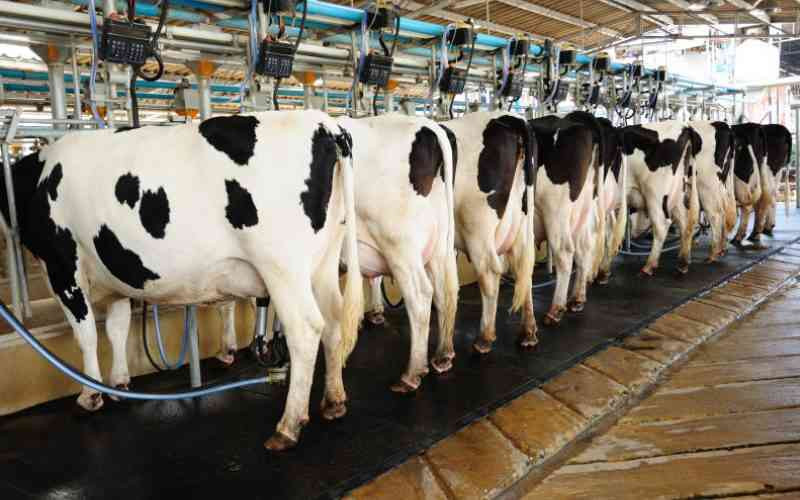
Dairy farmers will soon earn more for producing high-quality milk as the government shifts from quantity-based to quality-based payments. Speaking in Nyeri, Agriculture CS Mutahi Kagwe said farmers will be rewarded based on milk quality, including protein and butterfat content, to support value addition in the dairy sector. He said the reforms are driven by rising demand for products such as cheese and yoghurt, which depend on milk quality rather than volume. Kagwe noted that the transition will be gradual because milk-testing equipment is not yet available at all collection centres. He urged farmers to prepare for the changes and join cooperatives to improve bargaining power and access better markets. The dairy sector produces about 5.4 billion litres annually and remains a key source of income and employment.
Dairy farmers across Kenya will soon earn more for producing high-quality milk as the government rolls out a gradual shift from the long-standing quantity-based payment system.
Speaking during the annual general meeting of Mukurweini Wakulima Dairy Limited in Nyeri County, Kagwe said the reforms will see farmers rewarded not only for the volume of milk they deliver but also for its nutritional quality, including protein and butterfat content, as the country seeks to strengthen value addition in the dairy sector.
"For many years, the milk industry has essentially been a quantity-based system where pricing has depended only on the litres supplied. Moving forward, we are adding another dimension—quality. The quality of milk you bring will also determine how much you earn," said Kagwe.
The CS said the reforms are driven by the growing demand for processed dairy products such as cheese, yoghurt and other high-value products whose production depends on the quality rather than the quantity of raw milk.
"The amount of protein and other components in milk is becoming increasingly important because we are moving into cheese, yoghurt and other by-products. These products depend on the quality of the milk, not just the volume," he said.
Kagwe noted that while some dairy processors have already adopted quality-based pricing, the government will implement the transition gradually because milk-testing technology is not yet available across all milk collection centres.
"We are not ready everywhere for the measurement of milk quality, but we want farmers to prepare. We are transitioning slowly, but we are certainly moving away from quantity-based payments to quality-based payments," he said.
Kenya remains Africa's leading milk producer, with annual production estimated at about 5.4 billion litres, making the dairy industry one of the country's most important agricultural subsectors. The sector supports millions of smallholder farmers and contributes significantly to rural incomes, employment and food security.
“Moving forward, milk pricing will reward quality because that is what will drive value addition and better returns for our farmers,” he said.
He urged farmers to join cooperatives, saying organized groups are key to helping them access better markets and command higher prices.
"Farmers operating individually are often vulnerable to exploitation by brokers who offer low and inconsistent prices, while collective marketing through cooperatives strengthens bargaining power,







Subscribe to our newsletter and stay updated on the latest developments and special offers!







 join
join