
 The Standard Group Plc is a multi-media organization with investments in media
platforms spanning newspaper print
operations, television, radio broadcasting, digital and online services. The
Standard Group is recognized as a
leading multi-media house in Kenya with a key influence in matters of national
and international interest.
The Standard Group Plc is a multi-media organization with investments in media
platforms spanning newspaper print
operations, television, radio broadcasting, digital and online services. The
Standard Group is recognized as a
leading multi-media house in Kenya with a key influence in matters of national
and international interest.


Kenya has set 2028 as the target for integrating evidence-based traditional medicine into the country’s mainstream healthcare system, with the Government ruling out the creation of a parallel system of care.
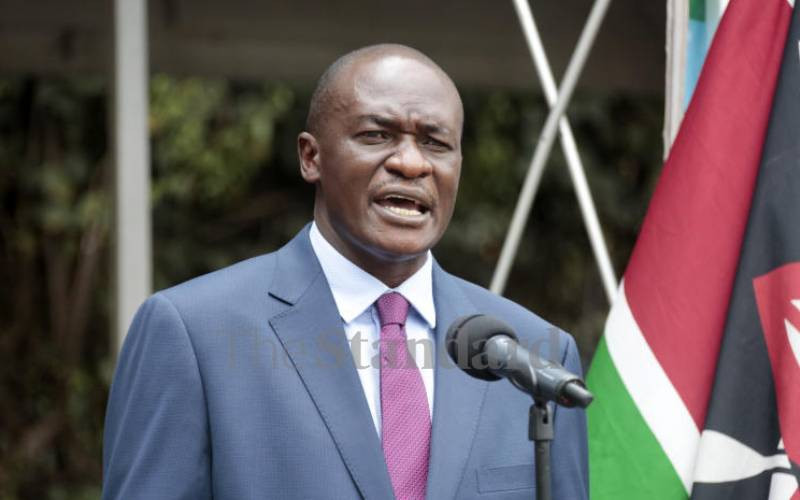
Health Cabinet Secretary Aden Duale said the plan is to bring traditional, complementary and modern medicine together under one healthcare system, provided traditional practices and products meet standards for safety, quality and effectiveness.
“As we pursue this integration, our objective is not to create a parallel health system and let me make it very clear. We only have one healthcare system in our country,” Duale said during the commemoration of African Traditional Medicine Day in Nairobi.
“So, we must integrate the two systems, the traditional health system and the current complementary modern medicine.”
The move will be guided by the National Traditional Complementary Intervention Medicine Policy, which the Ministry of Health is finalising. The policy will provide a framework for training, registration, licensing and regulation of practitioners, as well as quality and safety standards for traditional medicines.
The Ministry has completed stakeholder validation and is preparing for nationwide public participation before the policy is presented to Cabinet for approval. Duale said integration must be based on evidence rather than tradition alone.
“The future for this sector must be built on research, indigenous knowledge must be documented, it must be ethically studied, it must be scientifically validated, and it must be translated into useful health products and services,” he said.
- Free maternity care still unclear despite new SHA package
- Why the referral system is choking major hospitals as patients suffer
- Duale: Three suspected Ebola cases tested negative, surveillance upped
- WHO warns of rising Ebola threat as Kenya tightens response efforts
Keep Reading
He said research must move beyond documenting traditional practices to product development, clinical evidence, quality assurance and monitoring of possible adverse effects.
The World Health Organisation (WHO) representative to Kenya, Dr Neema Kimambo, said traditional medicine remains an important source of healthcare for many African communities and should be assessed using scientific methods.
“Traditional medicine should be safe, should be effective, it should be quality-assured, and supported by scientific evidence and regulation,” she said.
WHO, she added, does not support therapies simply because they are traditional, but supports generating evidence to determine their safety and effectiveness while respecting indigenous knowledge.
Kenya's research institutions are expected to play a central role in this process. Prof Elijah Songok, chief executive officer of the Kenya Medical Research Institute (KEMRI), said there is already widespread use of traditional and alternative medicine in communities, but more research is needed to establish its benefits and risks.
“There’s a lot of strong use in the community, but the research in terms of clinical efficacy and also the risks need to come strongly from KEMRI,” he said.
KEMRI has been working with traditional herbal practitioners to test products for safety and support them in meeting requirements for licensing. The institute is also involved in research and clinical trials aimed at developing medicinal products.
For traditional medicine advocates, integration must also protect indigenous knowledge that has been passed down through generations.
Dr Jade Maina, executive director of the Trust for Indigenous Culture and Health, said much of this knowledge was never formally documented.
“It was merely learned by watching our grandparents, by walking through the forests and fields, knowing which plants heal, which ones are used when mothers are delivering babies, which ones manage pain,” she said.
She called for the Government to complete and implement the policy, saying it would provide a foundation for recognition, regulation, research and safety.
Duale said the framework must also establish clear standards for practitioner training, registration and licensing, product quality, laboratory testing and monitoring of adverse events.
“We need a regulation that is firm in protecting patients, proportionate to risk, and it must be responsive to the realities of traditional practice,” he said.
The Government is expected to work with KEMRI, regulators, practitioners, communities and other agencies through a coordinated implementation framework.
Duale said the aim is to preserve valuable indigenous knowledge, scientifically test traditional practices, regulate products and integrate those whose value has been demonstrated.
The 2028 target therefore marks a shift from treating traditional medicine simply as cultural heritage or an alternative outside formal healthcare to bringing validated practices into the same system as conventional medicine, with patient safety and evidence at the centre.





 join
join