×

The Standard e-Paper
Join Thousands Daily
 The Standard Group Plc is a
multi-media organization with investments in media platforms spanning newspaper
print operations, television, radio broadcasting, digital and online services. The
Standard Group is recognized as a leading multi-media house in Kenya with a key
influence in matters of national and international interest.
The Standard Group Plc is a
multi-media organization with investments in media platforms spanning newspaper
print operations, television, radio broadcasting, digital and online services. The
Standard Group is recognized as a leading multi-media house in Kenya with a key
influence in matters of national and international interest.

Audio By Vocalize
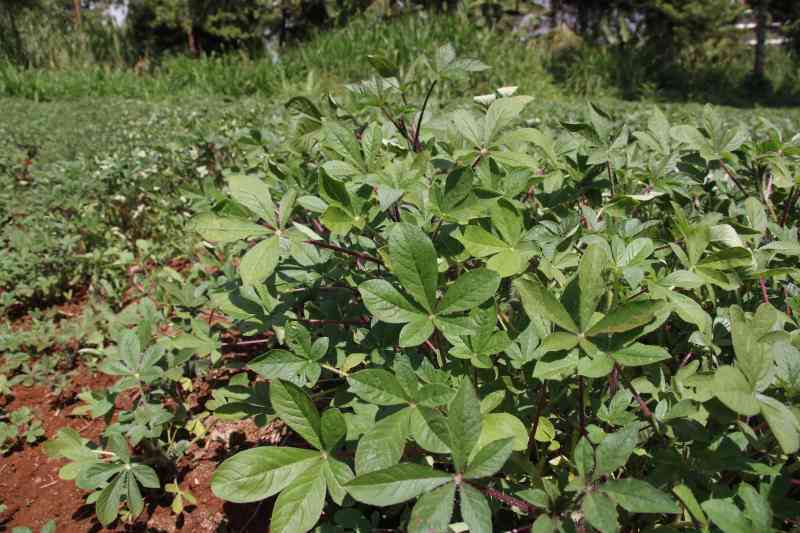
Vihiga is one of the smallest counties in Kenya, a factor that has often led many to assume that its agricultural productivity would remain low due to limited land resources.
However, in recent years, the county has made significant strides towards achieving food security and agricultural self-sufficiency.
Through partnership between the county government and development partners, lack of bigger agricultural land is no longer an obstacle to agricultural productivity as majority of the farmers are maximising the land use through mixed farming, climate-smart agriculture and participation in cooperatives that promote value addition and commercialisation of farm produce.
One farmer who embodies this transformation is Zinath Deen.
When she dug her first fish pond in Jepkoyai village nearly a decade ago, many of her neighbours dismissed the venture as unlikely to succeed in the densely populated hills of Vihiga.
Today, she proudly watches fish ponds spread across the county, transforming livelihoods and creating new sources of income for hundreds of families.
“I never imagined so many people would take up fish farming. When I started, very few believed it could work, but today, fish farming is changing lives,” says Deen.
Farming transformation
Vihiga’s fish farming transformation has been accelerated by a Sh69 million aquaculture initiative funded by the Norwegian Agency for Development Cooperation (NORAD) under the Advancing Resilient Nutrition-Sensitive Aquaculture (ARNSA) programme.
In many ways, Deen’s pioneering efforts laid the foundation for the wider institutional push that is now reshaping the county’s aquaculture landscape.
So far, 450 farmers, including Deen, have received more than 450,000 fingerlings, bird nets, predator nets, 3,600 bags of fish feed and support for pond construction.
Since March 2025, each farmer has been rearing at least 1,000 fingerlings under what has become the county’s largest coordinated aquaculture initiative.
The county has also acquired one vehicle and three motorcycles for extension officers to enhance support services and help farmers adopt best aquaculture practices.
“This project has come at the right time, as many of us were ready to scale up but needed technical help and affordable feeds,” Deen said.
Stay informed. Subscribe to our newsletter
Fish farming has emerged as one of the county’s standout success stories.
According to the Mid-Term Review report, the county facilitated the establishment of 450 fish ponds, significantly increasing aquaculture production and creating new income opportunities for farmers.
The county further strengthened fisheries development through construction of a building to house a fish-feed production plant, and the establishment of a circular economy fish production system at Nyangori High School and Moi Girls School under a NORAD-supported programme.
The aquaculture success story reflects a broader agricultural transformation captured in Vihiga County’s Mid-Term Review (MTR) of the County Integrated Development Plan (CIDP) 2023–2027, which identifies Agriculture, Livestock and Fisheries as one of the county’s best-performing sectors.
Among the key achievements highlighted in the report is the promotion of selected value chains through the distribution of seeds to 3,000 African Leafy Vegetables (ALVs) farmers and 6,000 avocado farmers, boosting production and diversification across the county.
Improving productivity
The county has also established 25 fodder bulking plots to improve livestock feeding and productivity while strengthening agricultural institutions under the national agricultural value chain development project (NAVCDP).
County Executive Committee Member for Agriculture, Livestock and Fisheries Julius Maruja attributed the progress to deliberate investments in farmer support programmes and extension services.
“Our focus has been on increasing productivity through farmers’ training, improved extension services, distribution of quality planting materials and promotion of modern farming practices. We also encourage our farmers to diversify into enterprises such as fish farming, poultry and value addition,” said Maruja.
The livestock and beekeeping sectors have also recorded notable gains.
Chief Officer for Agriculture Dr Betty Mulianga said climate-smart agriculture remains central to the county’s agricultural strategy.
“Agriculture is changing rapidly, and we must equip our farmers with the skills and technologies needed to remain productive. We are promoting climate-smart farming, better livestock management and improved fish production systems to ensure long-term sustainability,” said Dr Mulianga.






Subscribe to our newsletter and stay updated on the latest developments and special offers!





 join
join