×

The Standard e-Paper
Kenya’s Boldest Voice
 The Standard Group Plc is a
multi-media organization with investments in media platforms spanning newspaper
print operations, television, radio broadcasting, digital and online services. The
Standard Group is recognized as a leading multi-media house in Kenya with a key
influence in matters of national and international interest.
The Standard Group Plc is a
multi-media organization with investments in media platforms spanning newspaper
print operations, television, radio broadcasting, digital and online services. The
Standard Group is recognized as a leading multi-media house in Kenya with a key
influence in matters of national and international interest.
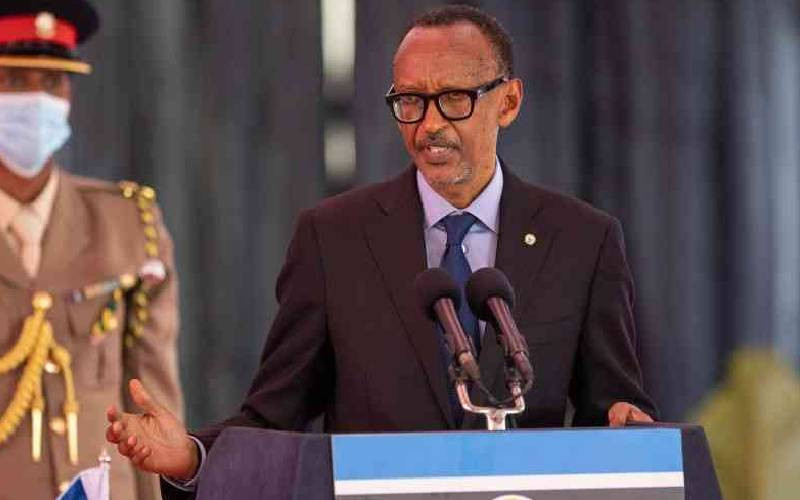
“If we were in Congo for the minerals, we would be 100 times richer than we are now,” said President Kagame during Umushyikirano
Umushyikirano is an annual 2 day National dialogue headed by the president of Rwanda, where Citizens from all walks of life gather to air their grievances, discuss the country's development, satisfaction, and dissatisfaction.
Kagame questioned the intentions of people asking him about Rwanda's involvement in Congo.
“If you ask me whether we are in Congo. Do you first ask yourself why Rwanda be congo? “
Kagame added that people have the notion that Rwanda and Burundi are like twins; however, he believes Burundi is closer to Congo, insisting that Rwanda did not cause the war in Congo.
“This war did not begin in Rwanda; we did not cause it. I have said a thousand times. People decided to take the easy part, find a scapegoat, and it’s always Rwanda,”
He, however, clarified that the problem they have with Congo is the genocide ideology.
“They always say, Rwanda, we are coming for you, we will finish what we started. When they say Rwand, a we are strong, what does that mean? I wish I were strong enough, but I am not. If I were strong, I could take the threats as simple, but I am not.”
“We are told Rwanda is in Congo for minerals. Rwanda intends to eat up the territory of congo. But people are hiding the true cause,”
During his speech, the International community was not spared. Claiming they create problems them come and blame Rwanda.
“The international community takes things literally; they support, but also create problems for us. sometimes you feel chocked, but instead of being chocked by all of that, I will be chocked by being defiant and tell you go to hell,”
Kagame also talked about last year's CNN interview, where he was asked if Rwanda was involved in Congo, and he responded, “I don’t know.”
“It is not an answer I should have given, but technically an answer that does not take me to court. How do you prosecute an ignorant man?” he said as the crowd laughed. “If you say yes, then that becomes the only problem in the world. Infact it will be easier for them to load the problems of Congo on you.”
On day 2 of Umushyikirano, questions were asked about Rwanda's safety and agreements signed with the DRC.
Olivier J.P. Nduhungirehe.The Minister of Foreign Affairs and International Cooperation of the Republic of Rwanda answered that more than 10 peace agreements have been signed.
Stay informed. Subscribe to our newsletter
“ Since 2000, there have been at least 10 peace agreements that were signed. At the same time, we have 10 UN Security Council resolutions that were adopted by the UN Security Council in New York,”
He added that all those agreements and resolutions talk about the neutralization of armed forces, armed forces including the FDLR.
“But those agreements were not respected. We don’t lack legal instruments, we don’t lack forces on the ground, we have Munisco on the ground for more than 27 years. What we lack is political will and good faith,”
Nduhungirehe said that political will and good faith are at 2 levels. “There’s, of course, the political will in Kinshasa because every time they sign an agreement under a ceasefire agreement, they violate it, and I have talked about attack drones targeting civilians, targeting villagers in Banyamurenge in South Kivu.”
He added that another level of lack of political will is that of the international community. Saying they have informed the international community, the UN Security Council, and mediators.
“We have an issue in Eastern DRC, the use of civilian airports and attacks against civilians in Eastern DRC, this is an issue, and then we have statements from the international community condemning the reaction without condemning the main issue,” says Nduhungirehe
“We have everything that it takes to have peace in Eastern DRC, but the only thing that is lacking is the political will by the Kinshasa government, also by the international community,” he concluded

Subscribe to our newsletter and stay updated on the latest developments and special offers!






 join
join